


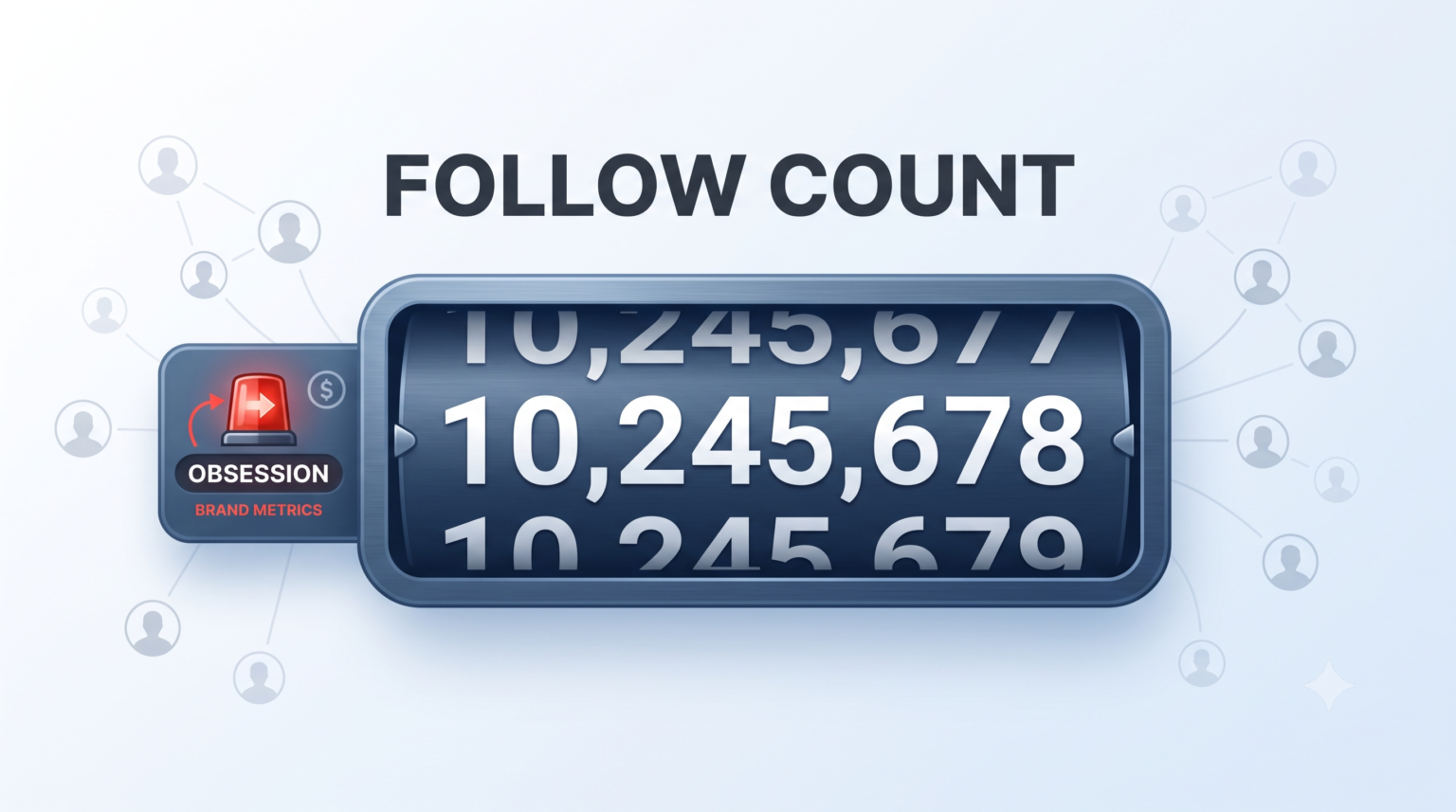


A brand manager asked today will usually say engagement matters more than reach. But when you ask the same person how the last influencer campaign was chosen, the answer is almost always the follower count.
That gap between what brands say they value and what they actually buy has existed for years. It has not closed even as the evidence against follower count keeps piling up, even though most people inside the industry already know the number is broken.
Follower count became the default as its logic goes back to television, where a bigger audience really did mean a bigger message. Although social media broke that link, buying habits haven’t changed a bit.
Most influencer marketing agencies still use sort the profiles by follower count first.
What the numbers actually show
A study by influencer analytics platform KlugKlug found that nearly three in five Instagram profiles in India carry more than 60% fake followers, mainly in beauty and fashion. Of the eight million profiles it examined, only 2.48 million had followings that looked genuinely real.
None of that has slowed the money even though India’s influencer marketing sector is on track to cross ₹3,375 crore by 2026 growing at 18% a year.
The obvious question is why brands keep paying for audiences a large share of which do not exist. The more useful question is why a metric everyone agrees is unreliable remains the easiest one to defend. The answer starts to show up once the size of the audience stops being the only thing measured.
Small accounts = bigger returns
Managing one contract with a familiar name is simple but managing fifteen smaller creators spread across languages and cities is not, even when the fifteen cost less and convert better.
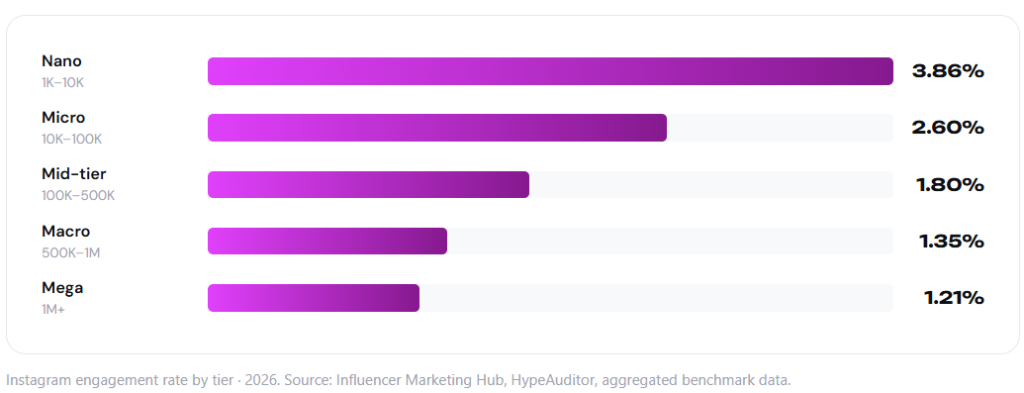
Micro-influencers with 10,000 to 100,000 followers deliver about 3.2 times the engagement of macro-influencers, at roughly 60% lower cost per post and close to 20% higher conversion.
Nano-influencers do better still on Instagram specifically, pulling engagement rates several times higher than accounts with a million or more followers.
Speaking on a panel at Mashable, Mat Micheli, co-founder and co-CEO of Viral Nation, said follower count is no longer treated as the industry’s main metric by brands paying atte


Kofluence’s Decoding Influence 2026 report found that tier-2 and tier-3 Indian cities now account for 43 to 48% of all influencer campaigns. Engagement in those markets runs at 4.5 to 5.5%, against 3 to 4% in the metros, at average fees of ₹35,000 to 90,000 in smaller markets compared with ₹3.8 to 4.5 lakh in a metro campaign.
Jag Chima, co-founder of IPLIX Media, said nano and micro creators are now delivering a disproportionate share of campaign value, even as brands still lean on celebrities and macro creators to generate initial reach.
More than the size, it’s who’s actually watching
As per an Instagram post by Varun Agarwal, Ayush Shukla, founder of FinnetMedia, who has spent seven years managing some of India’s biggest creators, has been watching accounts with 40,000 to 50,000 followers out-earn creators with 500K followers.
The clearest example is a practicing chartered accountant explaining tax to founders, earning more per campaign than a half-a-million-follower account run by someone who picked up the subject from Google and started posting about it. The same pattern shows up with founders documenting their own company as they build it: 30,000 to 50,000 followers, no daily posting schedule, sometimes silent for two weeks at a time, and brands still choosing them over accounts with ten times the reach.
The reason is who’s on the other end. A founder’s small following is disproportionately other founders, operators, and people who actually make buying and hiring decisions. Fifty thousand of those people are worth more to a brand than two million people passively watching someone repeat what they already know.
This is the same argument the fake-follower and engagement data already made, from a different angle. A number that cannot tell the difference between a founder’s real network and two million padded views was never a very precise instrument to begin with.
What this looks like on the ground
A cookware brand tested this directly. Instead of commissioning one polished video with a celebrity, it hired a creator in Karnataka with 50,000 followers to film herself using the brand’s skillet in her own kitchen, in Kannada.
The video worked and it drew real questions in the comments about how heavy the pan was, how it worked, and where to buy it, the kind of response a celebrity ad rarely gets even with many times the views.
Why the follower count still wins
But here is the part usually missed. None of this is really about which number performs better in a spreadsheet. It is about who takes the blame if a bet does not pay off.
An engagement based campaign invites a harder conversation if sales do not show up, because it was chosen on a promise rather than a number everyone already recognises.
There is a second, quieter reason the habit survives. Agencies handling these campaigns are typically paid a share of media spend, so one large celebrity contract can generate more fee revenue than the same budget split across fifteen regional creators requiring far more coordination. That incentive has nothing to do with what performs and everything to do with the size of the number being spent.
This is starting to change at the top of the market too. Hindustan Unilever has replaced flat-fee negotiations with a Cost Per View framework that prices creators on verified views rather than follower count. Under it, a macro creator who once commanded roughly ₹5 lakh a campaign has been repriced closer to ₹1.5 to 2 lakh, while nano and micro creators, whose views tend to match their smaller audiences more honestly, are holding their rates or gaining.
This does not mean brands are acting irrationally. Inside a large organisation, a decision that is easy to defend often beats a decision that is merely more likely to work, especially when the person making it has to justify it to someone several levels above who has never met the creator in question.
It also does not mean the celebrity model is pretty much finished. Macro creators and film stars still build awareness fast, which is a different job from the one nano and micro creators do well. The mistake is treating both as versions of the same number, rather than as two different tools bought for two different reasons.
The real reason follower count survives
Follower count will not lose its grip because better data arrives. It will lose its grip once buying reach by engagement becomes as easy to defend in a meeting among brand managers and founders as buying reach by size. HUL’s rate card is the first sign of what that shift looks like in practice. Until it becomes the norm rather than the exception, the extra sales smaller creators bring in will keep losing out to the number that needs no explanation.