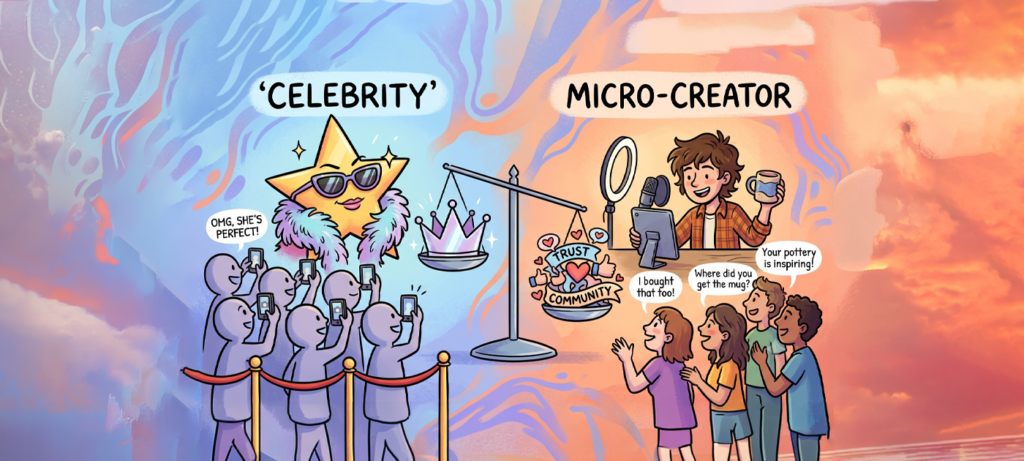






Audiences today are hard to fool. The moment a creator pushes too hard about how a product changed their life, viewers can tell within seconds, and plenty of them stop watching before the video ends.
But disclosure was never really the issue. A creator can tag every single post as an ad and still keep an audience’s trust completely intact. What actually gives an ad away is a shift in the creator’s usual style, how they talk and the small habits they show on camera, things regular viewers pick up on without even trying.
That should make scripting a losing strategy. Yet scripting is still how most brand collaborations are made: a brand writes the lines, the creator reads them close to word for word, and the value a brand is paying for quietly disappears in the process.
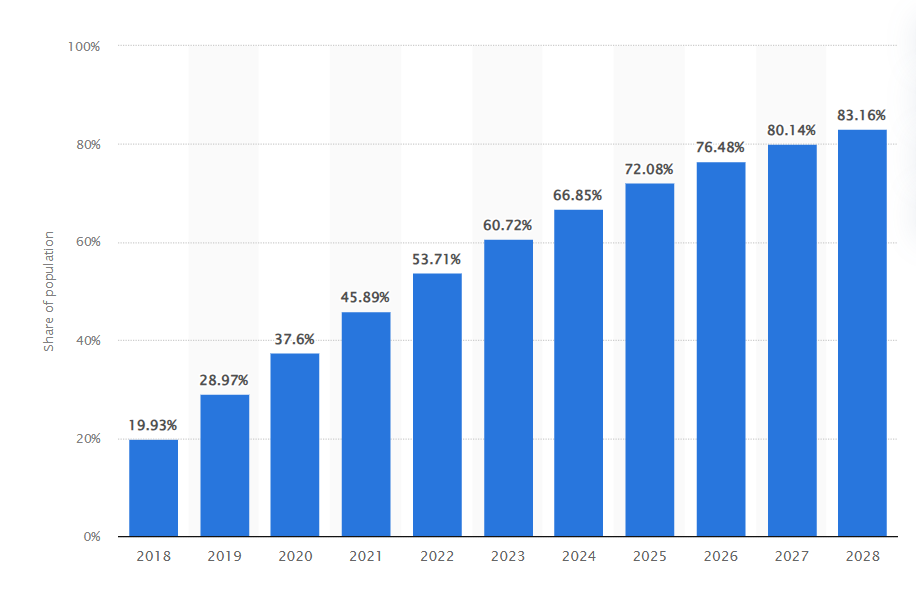
The scale of what’s at stake explains why brands keep doing it anyway. India’s internet base has crossed 800 million users, and social platforms, not search engines, have become where most of that audience decides what to buy. Product discovery on Instagram, YouTube and similar apps now accounts for more than 60% of it, ahead of Google.
The business case for creators has grown just as fast. Nearly half of all consumers, 49%, buy something at least once a month because of influencer content, and 94% of organisations already say influencer content outperforms traditional digital ads on ROI, often by two to three times the return.
The obvious question is why creators put up with scripts they did not write. However, the more useful one is why brands keep writing them, when their own campaign numbers increasingly argue against it.
How the scripting model actually works
A brand-scripted collaboration usually starts with a brief that reads like an ad script: exact lines and an approved tone, down to delivery notes. The creator records it, the brand‘s team signs off before it goes live, and the whole process is fast and easy to defend in a review meeting.
What it is not, on the evidence, is effective. Fahim Haris, a digital media professional with 13 years of experience, said on LinkedIn: “Brands need to stop scripting creators and let them use their own voice. Marketing teams want control, but audiences want authenticity, and after working with many brands, the data backs this up clearly.” Scripted content, he added, gets lower engagement, while content in a creator’s own voice performs three to four times better, since brand talking points and creator language are two different things, and mixing them up costs brands.

The brief is replacing the script
That raises an obvious follow-up: if scripting hurts performance, why do brands still go for it? Mostly because a script feels like insurance. It guarantees the words even when it cannot guarantee that anyone still believes them.
The alternative already exists. Grace Andrews, brand builder and creator economy expert, said: “The strongest briefs do not tell creators exactly what to say or exactly how to say it. They make clear what the brand is trying to achieve, what success looks like, and how they want the audience to feel, then they leave room for the creator to translate that in a way that will actually land.”
Sponsorship was never the real problem
But that still doesn’t explain why sponsorship itself hasn’t already broken trust between creators and their audiences. Indian audiences are used to seeing branded content, since most creators they follow run ad deals regularly, and that alone costs no one their trust. What breaks it is a script standing in for a real reaction and being passed off as one.
Which is where the smarter collaborations of the last year have been built. Freakins, the D2C denim label, could have simply paid two popular creators to post about a product. Instead, it put creators Tarini Shah and Agasthya Shah on a 40×60 feet billboard at Mumbai’s Haji Ali junction, live for three months, expected to earn roughly 3.6 million impressions in a single month, because a face people already follow earns that glance far more easily than a stranger’s ever could.
Where AI influencers hit the same wall
The harder question it raises is if audiences are really responding to a trusted voice rather than to any specific face, could a brand skip human creators altogether and build that same trust themselves?
Some brands are already trying this out. Kyra, one of India’s first virtual influencers, launched in 2022 by Himanshu Goel’s FUTR Studios, has crossed 2.55 lakh Instagram followers and run 15 brand campaigns for names including boAt, Amazon Prime Video and Titan. For polished, tightly controlled visuals, that works well.
An AI character still runs into the same wall as a scripted human one, only from a different direction. What audiences actually judge is whether the voice behind a face sounds real or not, and a generated character has no personal history or real opinion to sound real with.
The part brands keep missing
But here is the part that often goes unnoticed. Brands did not start writing scripts to protect their message, they wrote them to protect themselves from an unpredictable creator, which is a different kind of safety altogether, and it has nothing to do with what actually moves an audience.
None of this means creators need zero direction. Brands still have to hand over the facts and the disclosure requirements. What moves is who writes the actual line of dialogue.
The brands pulling ahead right now are not the ones running the tightest scripts. They are the ones that replaced the script with a brief, stated the facts, and got out of the way. A scripted line protects a brand’s message. It does nothing to protect the one thing a brand is actually buying when it hires a creator, an audience’s belief that the person talking to them is being real.