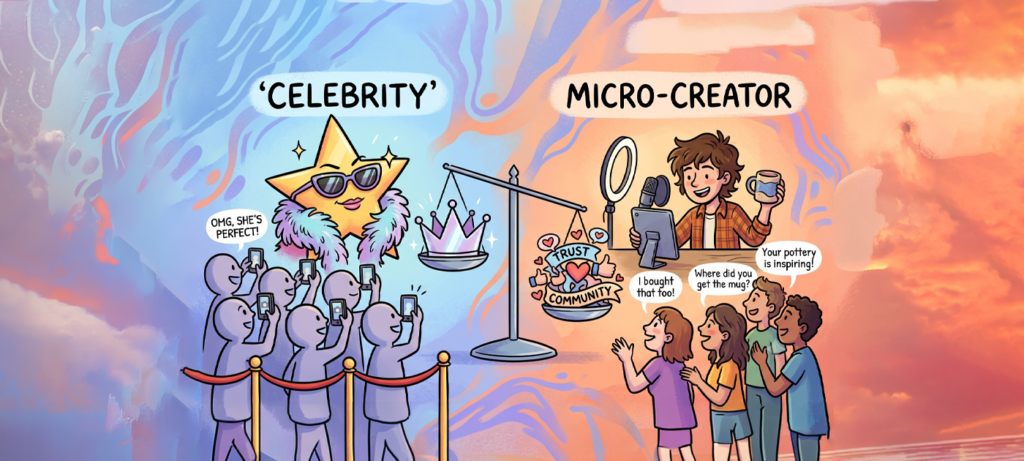






Creator’ and ‘influencer’ are frequently utilised interchangeably, but a distinct delineation exists between them. This difference explains why some people make money by selling tickets to live events, while others make money by promoting products.
Consider two individuals who regularly publish digital content, each maintaining a dedicated audience and generating revenue online. Despite these similarities, one may be classified as a digital creator, whereas the other is defined as an influencer.
This difference is neither by the choice of platform nor by the size of the following. Rather, it depends fundamentally on a single inquiry: what is the primary objective of the content?
Who is a digital creator?
A digital creator makes content because the content itself is the product. A comedy podcast, a coding tutorial, a short film as these exist to entertain or teach, first and foremost.
The audience shows up for the work. A brand deal, if it happens, sits on top of that work. It does not replace it.
This is why digital creators can build an audience without ever mentioning a single sponsor. The content carries its own weight, in the way a magazine article does or a well-made film.
Who is an influencer?
An influencer‘s job starts from a different place, like their content exists to move an audience towards a decision, usually a purchase.
A fitness influencer posting a gym routine is not really selling the routine; they are selling the leggings, the protein powder, or the app in the caption.



It is simply a different business model, one built on trust in a person’s taste rather than trust in a piece of work. Industry researchers describe this plainly: an influencer’s core skill is shaping buying behaviour, not producing a stand-alone piece of content.
The difference that actually matters
Both roles fall under one broad label, content creator, which simply means anyone who publishes online. Every influencer is technically a content creator. Not every content creator is an influencer.
A YouTube viewer who finishes a 40-minute video has invested real time in that creator. An Instagram follower who watches three seconds of a reel before scrolling on has invested almost nothing.
Both count as engagement on a dashboard, but both mean very different things about loyalty.
The same split shows up in sponsorships, as an influencer’s sponsored post is often the entire piece of content. A creator’s sponsor usually gets a mention inside a show the audience already wanted to watch, the way a cricket match carries an ad break without becoming the ad.
The India case study: When audiences pay to show up
Business, tech, and comedy podcasters are filling intimate venues, typically 200 to 800 seats, across Mumbai, Delhi, and Bengaluru.
Tickets often start around ₹499 and climb higher for premium seating. According to the news agency, the format has spread to genres from true crime to culture, with regional-language shows drawing similar crowds in cities like Pune and Hyderabad.
Nobody buys a ticket to a podcast recording because of a host’s outfit or lifestyle. They buy it because they already trust the conversation. That trust took months, sometimes years, of watch time to build.
What this means for a creator building an audience
Building a successful online career is less about choosing between becoming a creator or an influencer, since both paths can be highly profitable.
Instead, it requires absolute clarity about the specific path being pursued, given that each demands fundamentally distinct habits. Creators must prioritise consistency and depth to satisfy an audience looking for substance, whereas influencers need continuous visibility and relevance for an audience following a real-time lifestyle.
As a result, creators reduce the very depth their audience expects when they chase fleeting trends, while influencers lose the vital relevance they depend on when they remain silent for months.
FAQs
Is a content creator the same as an influencer?
No, ‘content creator’ is the umbrella term for anyone publishing online. Influencer describes a specific type of creator whose main goal is shaping purchases.
Who earns more, creators or influencers?
It varies. Influencers often earn faster through brand deals. Creators often build steadier, longer-term income through products, memberships, and live events.
Can someone be both a creator and an influencer?
Yes, and many people move between the two as their audience and income sources grow.
Why are Indian podcasters selling out live shows now?
Because long-form audiences build deep trust over time, and that trust converts into ticket sales once a large enough loyal base exists in cities like Mumbai, Delhi, and Bengaluru