





Most new creators price their first brand deal by guessing. A brand asks, “What do you charge?” and the number is determined on the spot. That single guess often sets the tone for all subsequent transactions.
A rate card fixes this problem. It turns pricing from a guess into a system.
This guide explains what a rate card is, how creators build one, and what actually moves the number up or down.
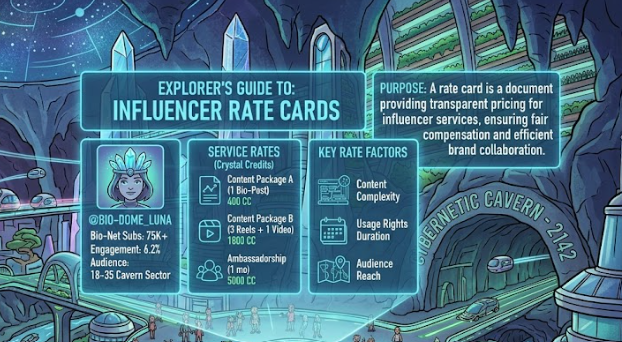
A rate card is a simple document that lists a creator’s prices for different types of content. It might show a fixed rate for one Instagram Reel, another for a YouTube video, and another for a Story series.
Most rate cards also include basic stats like follower count, engagement rate, audience demographics, and past brand work. This gives the brand context for why the price is what it is.
Why a rate card matters
A rate card protects creators from underpayment by establishing a pricing hierarchy. Without it, every single deal turns into a fresh negotiation. This allows creators to decline any offers below their limit without conflict.
A rate card stops you from being underpaid because you already know your prices. Lacking a rate card forces you to negotiate every single deal from scratch. Conversely, having one makes it straightforward to decline offers that fall short of your value.
In India, the number of creators has jumped from 0.96 million in 2020 to 4.12 million by 2025. Because there is so much competition, brands have more choices. Having a clear rate card helps you look professional and easy to work with, instead of just another person who does not know what to charge.


Creators usually use a few different ways to set their prices. A flat fee is a simple, fixed price for a specific piece of work. CPM pricing is based on how many people are expected to see the post, usually calculated for every 1,000 views.
Package pricing bundles several items together to create a larger deal. Value-based pricing is tied to the actual results the brand gets, rather than just the number of followers a creator has.
Many experienced creators also add a performance bonus to a flat fee, which allows them to earn more money if their content performs exceptionally well.
What affects the price
A rate card isn’t just money per follower; several factors influence the final pricing. While reach and follower count provide a starting point, they are rarely the deciding factor.
Niche also plays a significant role, as finance, tech, and B2B sectors often command higher rates due to larger marketing budgets and more limited competition.
Platform choice is another key factor, with YouTube integrations generally costing more than Instagram Reels because they require more intensive production.
Finally, creators should account for usage rights, the ability for brands to reuse content, and exclusivity, which limits future income potential and should be priced as a separate add-on.
What a good rate card should include:
A rate card doesn’t need to be long. A single, well-organised page usually works best.
It should have a short intro about the creator’s niche and audience. Then a pricing table listing each deliverable and its price. Package options, if any, go next.
Usage rights and exclusivity terms deserve their own line, so there’s no confusion later. A short note on payment terms, timelines, revisions included, and extra charges for reshoots rounds it off.
Keeping it to one page, and exporting it as a PDF, makes it easy for a brand’s marketing team to scan and forward internally.
Common pricing mistakes to avoid
Underpricing to win the first few deals. This can attract brands looking for the cheapest option, not the best fit, and makes it harder to raise rates later.
Quoting different prices to different brands for the same work. This damages trust once brands compare notes, which happens more often than creators expect.
Forgetting to price usage rights separately. Letting a brand reuse content in paid ads for free gives away real value.
Never updating rates. As an audience and portfolio grow, rates should be reviewed every few months, not left unchanged for years.
FAQs
How much should a creator charge for a brand deal?
Rates vary based on followers, engagement, niche, platform, and usage. Researching similar creators in your niche and audience size is the safest approach.
Is a rate card the same as a media kit?
Not quite. A media kit covers audience stats, past collaborations, and testimonials, while a rate card focuses on pricing. Many creators combine both into one file.
Should a creator publish their rate card publicly?
Opinions vary. Public rate cards save time and ensure transparency, but cap negotiations by revealing price ceilings upfront.
How often should rates be updated?
Update rates every few months or after major milestones like follower growth or strong campaigns, giving existing clients advance notice.
What if a brand only offers free products instead of payment?
This is common for newer creators and isn’t automatically a bad deal, especially for testing a brand relationship. It becomes a problem when it’s treated as the default arrangement rather than an occasional exception.