


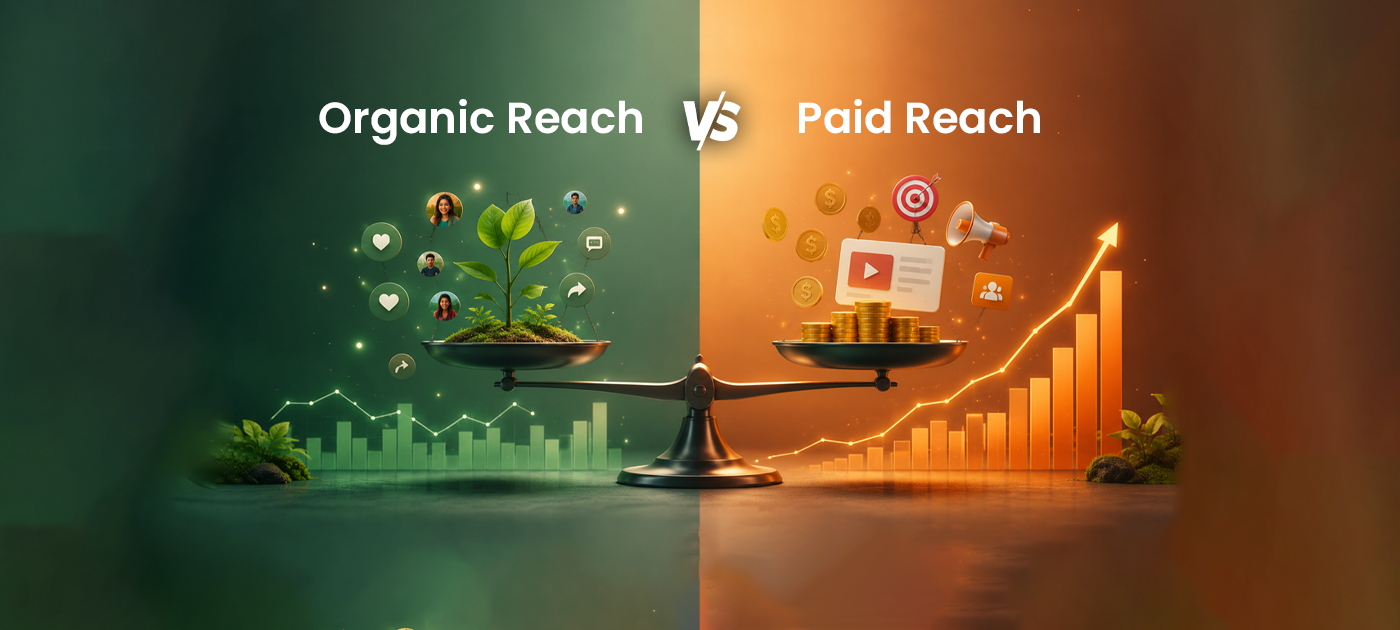


Organic reach is the free exposure a post receives when followers naturally share or interact with it. Because it is not an advertisement, it tends to build more credibility with the audience.
However, organic growth is often slow, and because social media platforms prioritise ads to generate revenue, the number of people seeing free content has steadily declined for years.
Simply put, an organic reach is the word-of-mouth of the digital world. It’s that natural buzz a creator gets when people truly connect with what they have shared and pass it along to others. Because it’s not a paid ad, people tend to trust it a lot more; it feels real.
The tricky part? It’s a slow burn. Since social platforms are businesses that need to sell ad space, they’ve made it much harder for free posts to get seen lately.
What is paid reach?
Paid reach is how many people see a post because a brand paid for that visibility. A boosted Instagram post, a display ad, or a full campaign through an influencer marketing platform all fall under this.
The benefit that a brand can get is to control it by choosing exactly who gets to see the content right down to age, city or interest. That’s what the spend is buying: that precision.
Organic reach vs paid reach
Organic reach is free attention that grows slowly, but because it isn’t an advertisement, people naturally trust it more. In contrast, paid reach costs money to get fast results, and its biggest benefit is control, as it lets you pick exactly who sees your post based on details like their age or location.
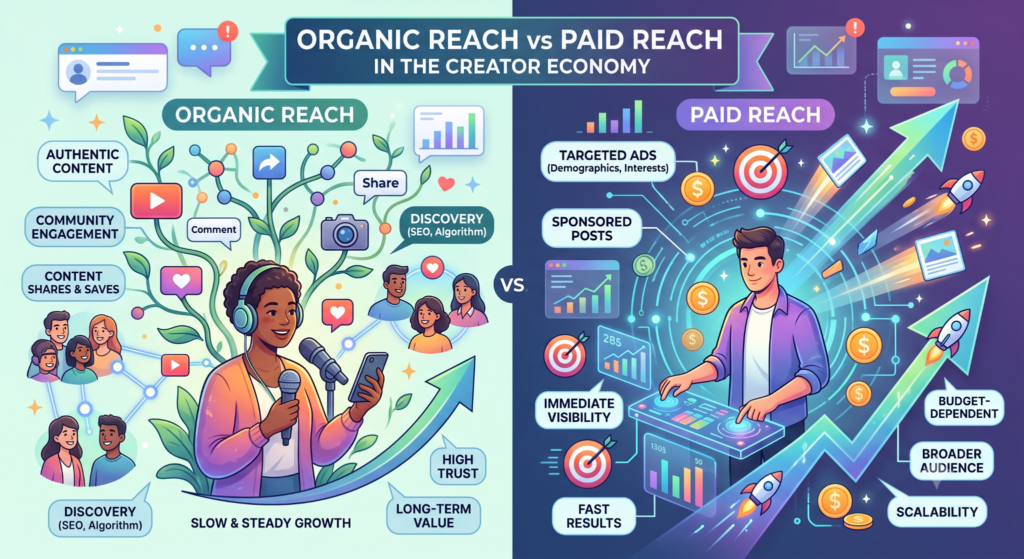
Brands generally use both at the same time because they serve different purposes: organic content builds genuine trust over time, while paid ads provide the speed and precision needed to reach a specific audience immediately.
A brand running ads can pick its audience with precision. Organic reach has no such control; it goes wherever the algorithm and the audience take it.
Why organic reach keeps shrinking
Platforms make money from ads, not from free posts sitting in a feed. So most of them have steadily cut how far a business page’s unpaid content travels.

Facebook is the clearest example. Its organic reach for brand pages sat around 16% back in 2012, before a series of algorithm changes aimed at prioritising “meaningful interactions” between friends and family pushed it down into the low single digits, where it has stayed through 2026, per data compiled by The Kirk Group and Sprout Social.
That squeeze on free reach is precisely why earned media value entered the conversation. Brands needed a way to measure what all that unpaid attention was actually worth.
What is earned media value (EMV)?
Earned media value puts a price on attention that was never paid for. It turns likes, shares, views, and mentions into a rupee or dollar figure.
The logic behind it is fairly blunt. If a brand’s organic content reached as many people as a paid ad would, EMV asks what that ad would have cost.
No cash actually changes hands here. EMV is a comparison, not a transaction. But it gives marketing teams a way to explain unpaid attention to people who think purely in budgets.
How brands calculate EMV
There is no single agreed formula for this, and that’s one of the metric’s most-cited weaknesses. Most tools build their number around CPM, short for cost per thousand impressions.
Organic content is usually valued higher than paid reach of the same size. The reasoning is that some tools apply a multiplier of two to four times the base CPM, on the theory that unpaid attention carries more credibility than a placement a brand paid to secure.
Why brands track EMV
EMV hands finance teams a number in a language they already speak: money. Vague ideas like “brand buzz” suddenly become something a spreadsheet can hold.
Marketing teams use it to compare one campaign against another, to work out which creator delivers the most value per rupee spent, and to check whether earned attention is actually growing quarter on quarter.
L’Oréal’s influencer programme is a great example of success. One single campaign created over $8 million worth of free publicity in just a few weeks. This was so effective that L’Oréal jumped to the top of the rankings, beating out big rivals like Estée Lauder and Maybelline.
Most of that figure came from unpaid, organic creator mentions rather than sponsored posts, which is exactly the case brands make for tracking EMV in the first place: it turns “the internet is talking about us” into a number a CFO can compare against ad spend.
FAQs
Is EMV the same as real revenue?
No. It is an estimate of what attention would cost as an ad, not money the brand actually received.
Why does EMV differ between tools?
Each tool sets its own CPM benchmarks and multipliers, so the same campaign can show very different EMV numbers depending on which platform ran the calculation.
Should a brand pick organic reach or paid reach?
Neither works well alone over the long run. Organic builds trust slowly; paid buys speed and precise targeting when a brand needs it fast.
Does a high EMV mean the campaign worked?
Not on its own. EMV measures attention, not outcomes like sales or sign-ups, so it works best sitting alongside other metrics rather than replacing them.