




Many people assume creators earn revenue only from brand deals, primarily because those are visible advertisements. When an audience sees a sponsored video or a tagged product, it is easy to assume that is the way a creator gets paid.
But brand deals are not the only way that creators earn money in India. According to the news reports, on a global scale, brand partnership accounted for 91% of creator revenue in 2021, whereas projections for 2026 indicate a decline to 59%.
Apart from brand deals, revenue earnings include those from platform distributions, subscription models, digital assets, and professional services. These channels operate independently of brand authorisation.
How much do Indian creators actually earn
India now counts 4.12 million creators, four times the number from five years ago, with two in three now based outside metro cities.
But only 2 to 2.5 million of them actually earn money from their content, according to BCG. Scale and revenue are two different things.
YouTube alone paid Indian creators, artists, and media companies more than ₹21,000 crore over the past three years. Yet only 65,000 Indian channels crossed the ₹1 lakh mark in 2024, out of over 100 million channels that uploaded something.
The income streams beyond brand deals
YouTube shares 55% of ad revenue with creators on long videos and 45% on Shorts, paid from a national viewing pool rather than a per-video rate.


This is why YouTube and Instagram revenue earned are calculated differently. YouTube pays for watch time inside that pool, while Instagram has no direct revenue split at all. Sixty-three per cent of Indian creators earning from YouTube call it their main income source.
A creator with a paying community earns a predictable monthly amount, independent of any algorithm. YouTube channel memberships in India offer creators a 70% share after local taxes and store fees, arriving regardless of whether that week’s video performs well.
Courses, templates, and guides are built once and sold repeatedly. A creator who has already explained something useful on camera already owns the raw material for a paid product.
Creators earn a commission when a follower buys through their link. This works best as a top-up income, rarely as a main one, since commission rates vary widely by category.
Coaching calls, workshops, and consulting convert a creator’s trust into direct payment, needing no brand budget and no algorithm’s cooperation at all.
What this means for an Indian creator
Domestic ad rates in India are still low compared to Western markets, so a chunk of many creators‘ YouTube income actually comes from overseas viewers. For some, foreign views quietly fund the bulk of earnings, even when most viewers watching are Indian.
This makes platform choice a strategic decision, not a habit. A creator leaning only on Reels or Shorts for pay is leaning on the thinnest, most volatile stream available.
Non-metro creators are also shifting where the money moves. Non-metro creators in paid brand campaigns grew from 38,000 to over 408,000 in five years, though most still land only one campaign a year.
That gap between having an audience and earning steadily from it is exactly what owned income streams close.
FAQs
Do Indian creators need a huge following to earn from these streams?
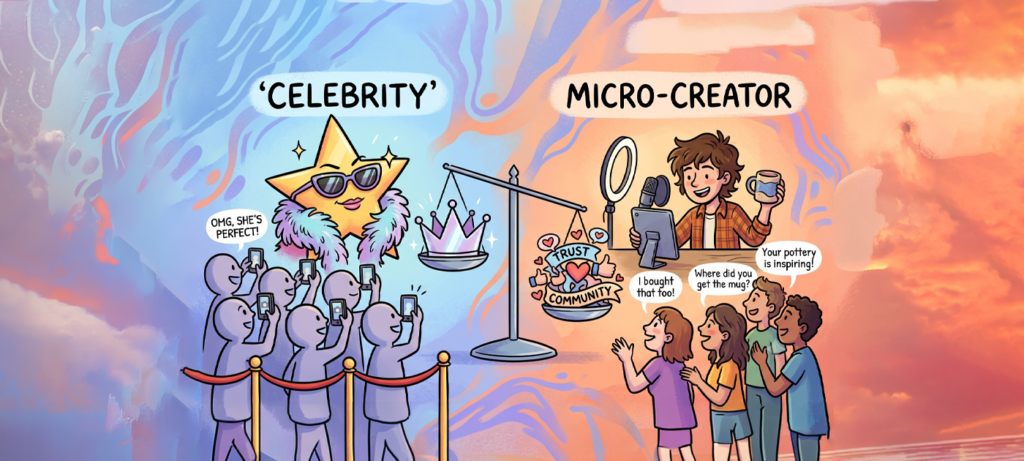
No. Coaching, digital products, and memberships depend more on audience trust than sheer size. A smaller, loyal following in a Tier 2 or Tier 3 city often converts better than a large passive one.
Why do Indian creators often earn more from international viewers?
Domestic ad rates remain lower than in markets like the US, so a smaller slice of foreign viewership can contribute a large share of earnings.
Which income stream is most stable for Indian creators?
Subscriptions and memberships tend to be steadier, since they arrive monthly regardless of one video’s performance.
Can affiliate marketing replace brand deals entirely?
Rarely on its own. It works best layered alongside other streams, since payouts fluctuate by product category and season.