





Creators often confuse reach, impressions, and views, but these three numbers actually tell very different stories about who is watching your content.
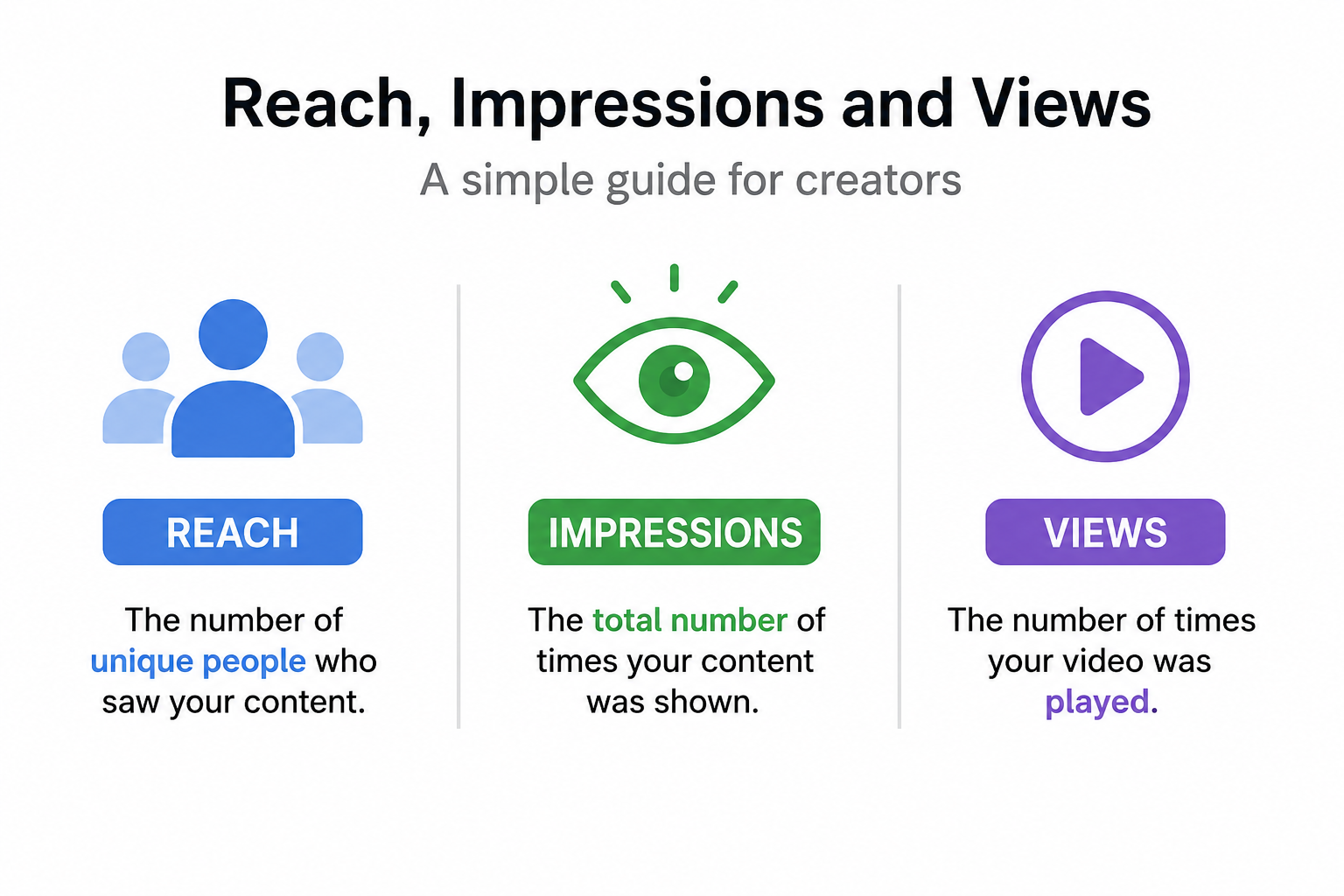
The short version: ‘Reach’ counts people. Impressions count how many times something was shown. Views count whether anyone actually stuck around to watch it.
Reach is measured on post impressions
Reach measures how many unique people saw the post; if a single person views it multiple times, it is still counted as one view. Impressions count every time a creator’s post is shown on a screen.
If the same person sees the post three times, that’s three different impressions even if it’s just one unit of reach.
A view is usually only counted after a viewer has watched for a certain amount of time, like 30 seconds, to help filter out accidental scrolls or clicks.
Did anyone really watch? Reach is the number of unique people who saw the content, and impressions are the total number of times it was displayed. That means if one person sees the post three times, that’s three impressions but only one reach.
Views are video-specific and only count if somebody watches long enough to prove that they are actually paying attention, not just scrolling by.
https://www.instagram.com/reel/DSVIwliDsaH/?utm_source=ig_embed&utm_campaign=loadingMeta has actually been moving its own language in this direction too. Back in 2025, organic impressions on Instagram content quietly got folded into a broader “Views” metric that now covers Reels, Stories, and more.

Simply put, a YouTube video, watching for five seconds, and bailing. That’s not a view. Same person, same video, but they stick around for 35 seconds this time; now it counts.
What’s the difference between views and count?
If the goal is brand awareness, reach is the number worth watching, since it shows how far a message actually spread to new people. If the goal is repetition, keeping a message top of mind for people who’ve already seen it, impressions and frequency matter more.
And for anything video-first, views are the only one of the three that actually confirms someone stopped scrolling long enough to pay attention.
High impressions next to flat reach usually means the same small audience is getting shown the same ad over and over, not that the campaign is finding new people. High reach next to weak views suggests plenty of people saw the content but very few bothered to watch it.
FAQs
Can impressions ever be lower than reach?
No. Impressions track every display and reach counts unique individuals, so impressions will always equal or exceed reach. If impressions appear below reach, a tracking error has occurred.
Is a high reach always a good sign?
Not on its own. Reach only confirms that people saw it, not whether they cared, clicked, or watched. High reach with weak engagement or views means it was widely shown but didn’t land.
Why did Instagram stop showing impressions on organic posts?
Meta replaced organic impressions with a broader “Views” metric for Reels and Stories in 2025. Impressions remain available for paid ads via Meta’s Ads Manager.
Does refreshing a YouTube video add to the view count?
Yes, but within limits. YouTube caps views from a single account to around four or five per video every 24 hours, and each refresh must clear the roughly 30-second watch threshold to count.
Which metric should a brand actually prioritise: reach, impressions, or views?
It depends on the goal. Reach targets and new audiences. Impressions and frequency build repetition to stay top of mind. Views are vital for video, confirming actual watch time instead of a simple display.