



According to the YouTube Help Center, AI technology has revolutionised content production on YouTube. With the help of AI, people can now script, edit videos, record voice-overs, and create images much more quickly than before. However, even though these tools have boosted productivity, they have been the reason for an increasing number of unoriginal videos created primarily to attract more views.
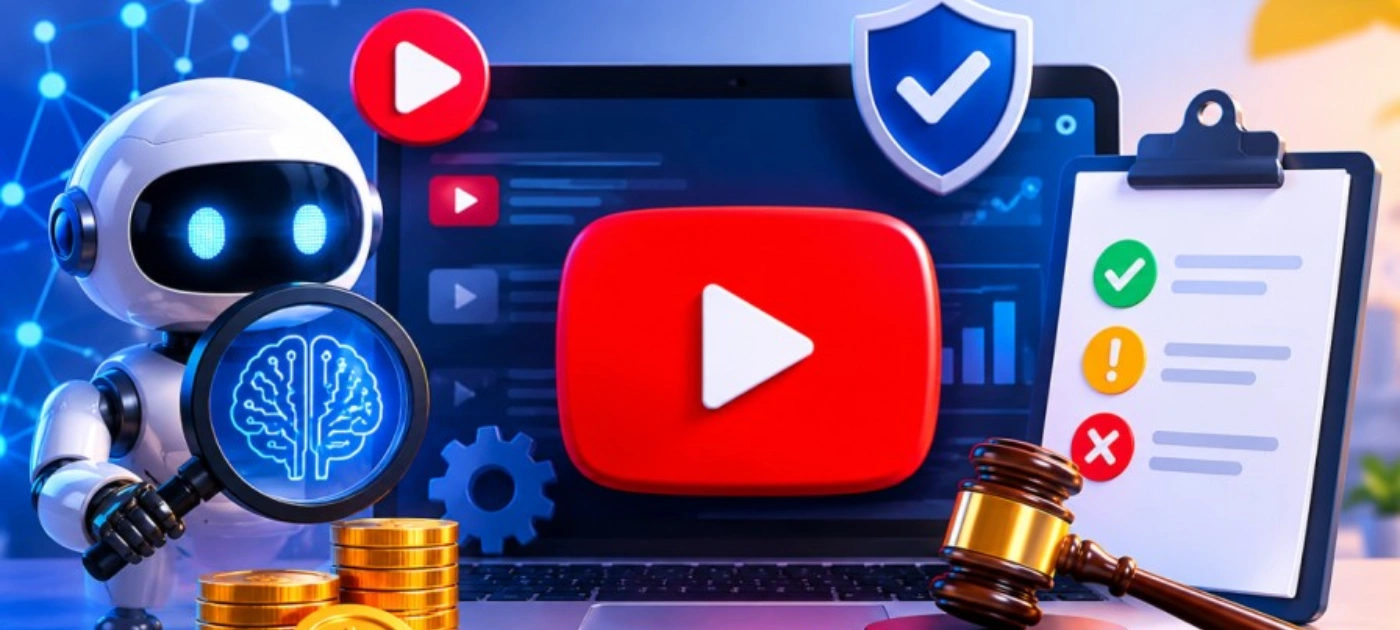
To address this challenge, YouTube has released new information about the company’s monetisation policy regarding artificial intelligence. Instead of limiting the use of AI technology, the company has improved its monetisation policies and ensured that only quality content will be eligible to earn advertising revenue.
Why has the policy changed?
This is the latest update in a situation where YouTube is facing mounting pressure to ensure high-quality content while continuing to encourage innovation. Advertisers want a safer environment for their advertisements, while users have grown tired of the AI-generated content, which offers little originality. Instead of bringing about a total change in the policy framework, YouTube has tightened its guidelines with regard to monetisation. It has made it clear that artificial intelligence is still welcome as long as it helps enhance creativity.
What is changing under the new policy?
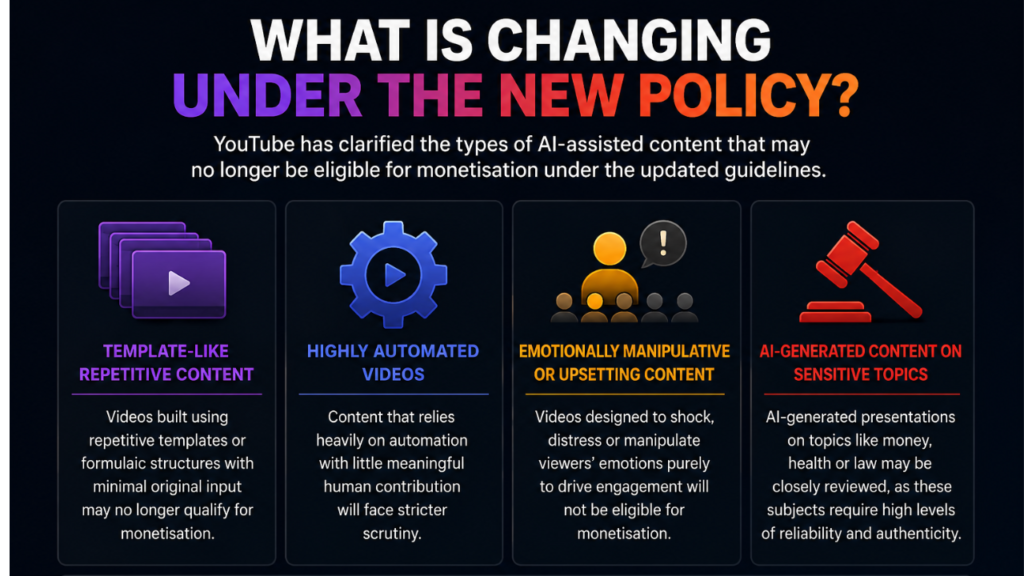
In the new policy, the types of AI-assisted content that may no longer be eligible are listed. Monetisation has been highlighted. This will include videos built around repetitive templates, highly automated content, and generic videos with minimal human input. The new guidelines also address emotionally manipulative or upsetting videos that are made for shocking audiences. Apart from this, AI-generated videos that cover financial, health, or legal topics might be scrutinised since such topics demand reliability and authenticity.
One significant aspect of YouTube’s monetisation policy is that it has specified that AI-generated videos containing original stories, editing, expertise, and creativity can be eligible for monetisation. The changes are effective from 16 July 2026, and the update is for the YouTube Partner Program members worldwide.
Why does this matter for creators and businesses?
YouTube’s AI Monetisation Policy Update reflects a broader shift within the creator economy. Success is moving away from automated content generation towards originality and expertise. This policy change is likely to benefit businesses investing in creator partnerships. Working with channels that regularly generate quality content will become even more important as advertising moves towards creating brand-safe environments.
What does this mean for the future?
YouTube’s latest clarification shows that AI will continue to be an essential tool for content creation in the future, but originality will continue to decide whether content remains eligible for monetisation in the long run. YouTube is making clear distinctions between creativity assisted by AI and automation-driven content. This seems to indicate that any future updates will continue to favour creators who make use AI with their expertise and creativity.