


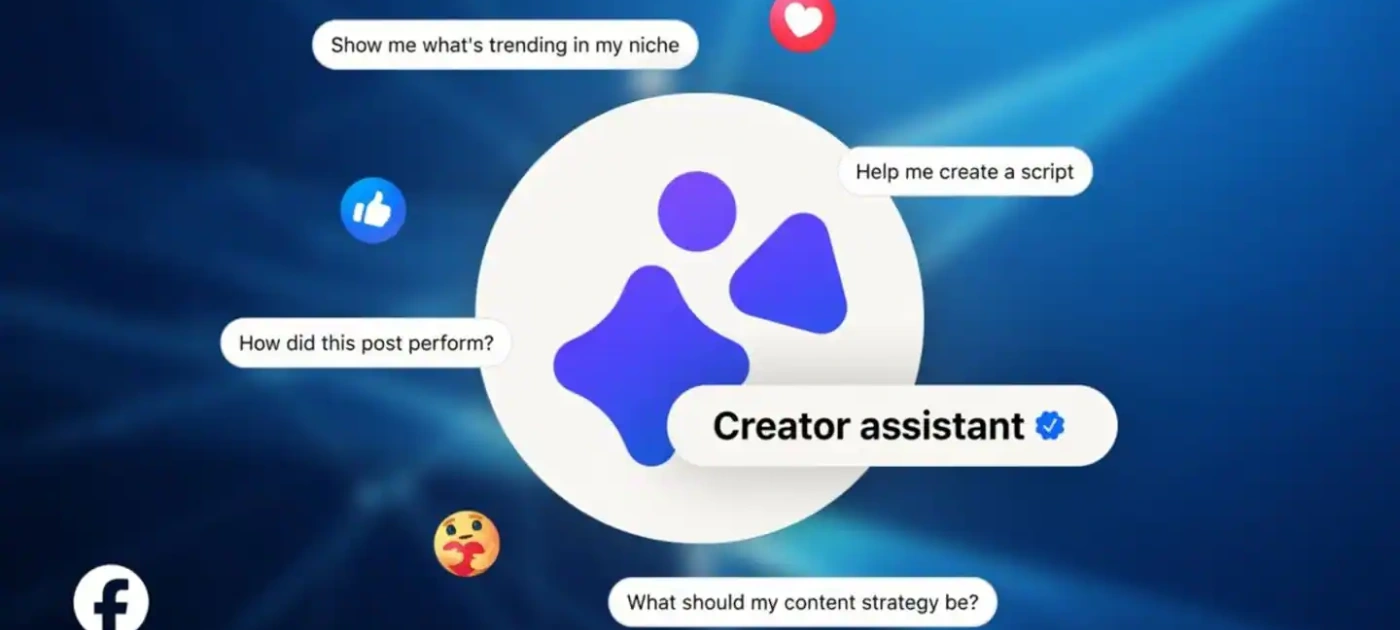


Meta launched Creator Assistant on June 3, 2026, rolling it out to eligible creators in the US, Canada, and India. The AI-powered tool sits inside the Facebook creator dashboard and lets creators ask conversational questions about their content, get instant answers, and receive personalised recommendations based on their performance data.
How it works
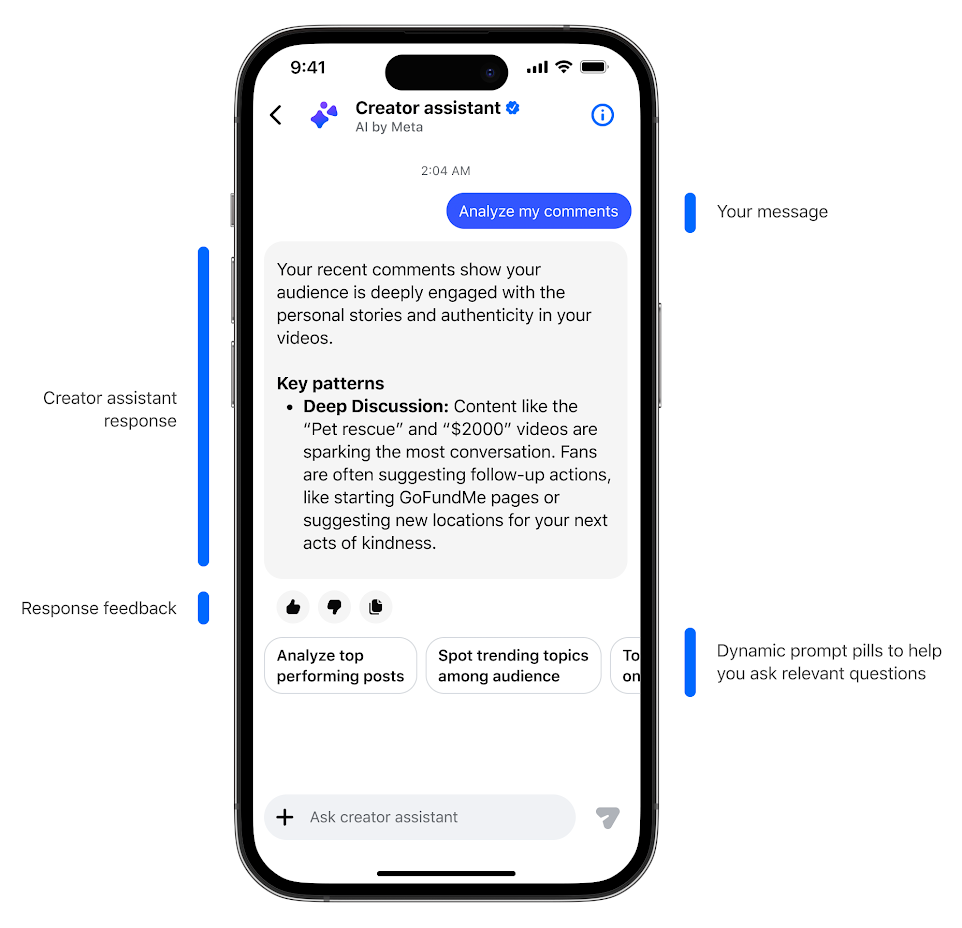
Instead of navigating complex dashboards, creators can type questions like “Why did this Reel get more views than usual?” or “When should I post?” and receive answers within seconds. The assistant draws on a creator’s historical performance, audience behavior, and trends specific to their niche.
Creator Jen Hamilton said, “I don’t know what to do with those numbers. So I really appreciate having something that can break it down for me.”
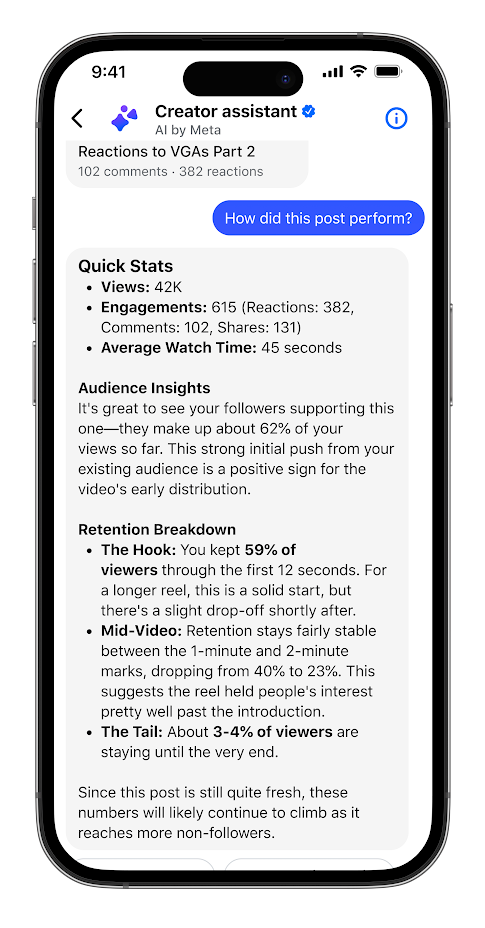
The tool offers three main functions. First being Performance Analysis, which lets creators understand why a reel outperformed others or how their audience has shifted. Second is Content Recommendations, which use historical data and real-time viral trends across Meta’s ecosystem, cutting out the guesswork. Lastly, the Trend Insights, which account for a creator’s specific performance data and audience behavior alongside broader Facebook trends, including trending audio and popular formats.
Meta positioned the rollout as making content creation more accessible, especially for smaller creators. The conversational interface reduces friction as creators get direct answers without leaving the app, addressing a real pain point where many spend more time decoding dashboards than creating content.
The convenience question
For most creators, this is a useful feature.
Meta recently released an AI support assistant for account recovery that hackers compromised almost immediately. Attackers took over high-value Instagram accounts by simply asking the chatbot to change recovery email addresses and reset passwords. Meta patched the vulnerability, however, the incident raised questions about security architecture.
Creator Assistant requires similar account access to pull performance data, and Meta hasn’t disclosed whether it has different safeguards than that vulnerable system. For creators whose accounts are their livelihood, handing broad access to an AI system with a recent security history is a calculated risk.



There’s also a second concern, which is algorithmic homogenization. If Creator Assistant recommends the same trending audio or format to every creator using it, thousands of creators will receive identical recommendations. This will lead to more redundant content, not less. In India, where creators already struggle against perceptions of lacking originality, this matters.