

Instagram Bot: On May 6, 2026, Meta’s purge of bot networks, inactive accounts, and linked growth farms hit the platform’s own official account hardest with a loss of 15.2 million followers in a single pass, dropping it to 686M. If the platform itself wasn’t clean, nobody was.
The event, now being called “The Great Purge” across creator communities, wasn’t a technical glitch as Meta has run similar sweeps before. What made this one different was scale and the fact that it arrived at a moment when the influencer industry’s follower-count economics were already under pressure.
Global names took the steepest numeric hits. Virat Kohli, Priyanka Chopra, Kylie Jenner, and MrBeast all saw their counts drop by millions. In India, smaller creators reported losing between 2% and 5% of their total audiences overnight. For a creator hovering just above the 1M threshold that unlocks “Mega” tier brand deals, it’s a bracket drop with direct revenue consequences.
A Meta spokesperson shares statement regarding Instagram’s removal of followers from some accounts:
— Pop Base (@PopBase) May 7, 2026
“As part of our routine process to remove inactive accounts, some Instagram accounts may have noticed updates to their follower counts. Active followers remain unaffected, and any… pic.twitter.com/MGySH9LxAR
What the sweep actually removed
Meta’s purge targeted three categories: automated bot networks used to artificially inflate engagement; accounts inactive for over 24 months; and linked account farms, these were clusters managed by growth services that mid-tier creators have long used to clear brand filters and tier thresholds.
The sweep was a routine authenticity measure that Meta has run periodically, but this cycle was broader than previous ones. Adam Mosseri, head of Instagram, addressed it directly while acknowledging that the removed followers never existed as real human accounts.
The pricing correction nobody wants to name
Nearly two out of three Instagram profiles in India carry fake followers, according to influencer marketing platform KlugKlug. That number has been known inside the industry for years. What changed on May 6 is that the platforms made it visible.
For years, follower count was the primary input in influencer rate cards and the number that determined whether a creator was charged as a Nano, Micro, Macro, or Mega. The result was a pricing structure built partly on fiction. Indian mid-tier creators in the Macro bracket regularly commanded campaign fees in the ₹5–15 lakh range, with those numbers anchored to total follower counts rather than verified engagement.
The purge has cracked that anchor. Agency conversations since May 6 point to downward pressure on rate cards, particularly for creators whose counts dropped materially and whose engagement ratios were already thin. The creators most exposed are those who used growth services to clear tier thresholds, their remaining audiences are now smaller and, critically, more scrutinised.


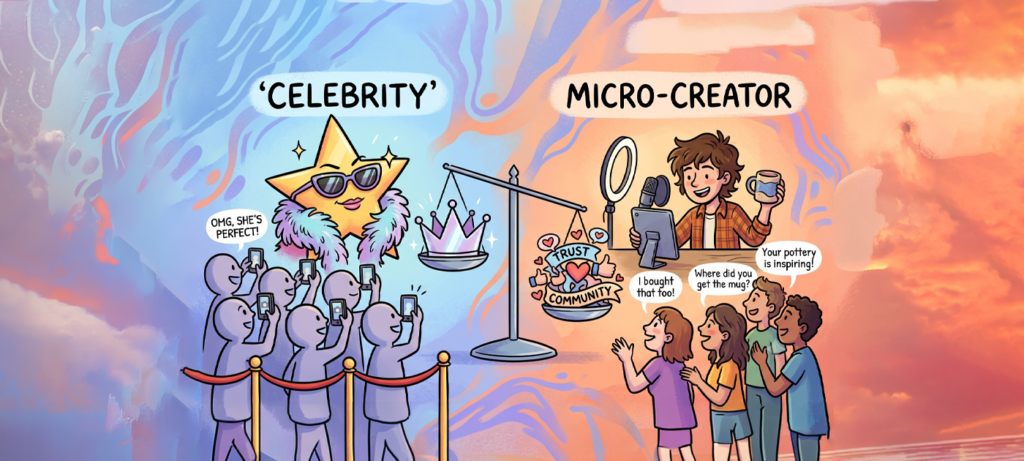
Neil Patel, co-founder of Neil Patel Digital, framed the underlying problem months before the purge, posting on Instagram in February: “If you’re spending thousands on influencer marketing and not seeing sales, you’re likely making the biggest mistake brands still make in 2026: paying for follower count instead of buying trust.” The events of May 6 made that observation industry policy.
What agencies have to do right now
For talent agencies, this is a credibility test. A roster that collectively shrank by millions of followers needs an explanation on record, delivered proactively to brand partners. Agencies that wait for clients to ask are already behind.
The immediate practical shift is the purge-window audit. Any brand renegotiating creator deals right now should demand engagement data with a 30-day lookback that explicitly excludes the volatility window between May 6 and May 8. Benchmarking against those three days produces meaningless numbers.
The longer structural shift is away from reach-based buying entirely. A creator driving ₹10 lakh in direct merchandise sales from an audience of 100K is a more defensible investment than a 2M-follower account that can’t move a single SKU. That case has always been easy to make on paper. Now it’s easy to make in a rate card negotiation too.
What creators have to do right now
For creators who came through the sweep cleanly, the priority is proving it. Third-party analytics platforms like Qoruz can provide the documentation of verified audience quality, bot-free confirmation, engagement benchmarks that turns “my numbers are real” into something a brand can put in a brief.
The creators who move on this first will set the new pricing floor. The ones who wait for brands to ask will find themselves negotiating from a weaker position.
Chasing reach has always been a fragile strategy. The purge just made that fragility visible in a single news cycle.
The correction the industry needed
The irony of the Great Purge is that Meta’s cleanup is better for serious creators than the system it replaced. Authentic communities were always being undervalued relative to inflated counts and that changes when the inflation gets removed.
This marks the end of an era where a high followers count meant everything. Now the intelligence gap is closing, and power is finally shifting back to those with high-intent, verified audiences.