




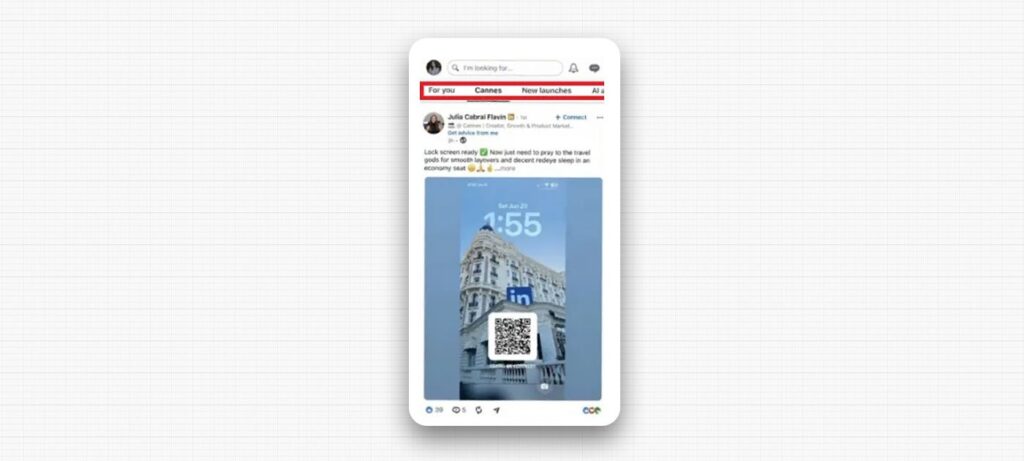
LinkedIn is currently testing suggested feeds, topic-based content streams shown next to the main feed that push posts to people beyond a creator’s own followers.
The feeds are recommended on two signals: the topics a user already engages with, and trending news judged to be of broad interest. Julia Cabral Flavin, LinkedIn’s senior director of product marketing, who posted the example, said the aim is to help professionals keep up with news in their fields and to build the platform’s standing as a source of information.
This is not the first attempt, as LinkedIn ran a similar set of alternative feeds last year, and it quietly disappeared for many users after a weak response. The current version chases the same goal, with more of the platform’s content, but from a different angle.
Why LinkedIn wants more places to show content
New chief executive Daniel Shapero said in May that LinkedIn posts rose 12% in the first quarter of 2026, with paid video up almost 30% year on year.
More content fighting for the same main feed means the platform needs fresh slots to display it, and a second feed is one such slot. Holding users in the app longer also feeds its advertising business.
What it means for creators in India
For creators, LinkedIn suggested feeds target that one important metric that is, organic reach, or how far a post travels without paid promotion.
India is LinkedIn‘s second-largest market after the United States, and a Bengaluru creator who posts consistently about SaaS hiring would surface in a tech or hiring feed for users who have never followed the account.
For someone without a big network, that topic-based discovery is the gap between reaching a couple of thousand followers and reaching a far larger, relevant audience.


Still a test, shown first at Cannes
Cabral Flavin said the feeds are being shown to selected creators attending the Cannes Lions festival this week, and that early feedback has been positive, which she suggested could lead to a wider launch. LinkedIn has not given a timeline or said which markets would get the feature first.